Who builds ssrchecker, and how it decides
ssrchecker is a free diagnostic tool that fetches any URL twice — once as raw HTTP with no JavaScript, once in real headless Chrome — and compares the two to determine whether the page is server-side rendered, client-side rendered, or hybrid. It is built and maintained by Abdul Mannan Soomro, a technical SEO consultant who works on rendering and indexing problems.

The person behind it
I'm Abdul Mannan Soomro. I work on technical SEO, specifically the part where a site looks perfectly fine in a browser and almost empty to a crawler. That gap is where a surprising amount of lost organic traffic lives, and it is invisible unless you go looking for it deliberately.
ssrchecker exists because checking this manually is tedious and easy to get wrong. Disabling JavaScript in a browser doesn't replicate what Googlebot does. Viewing source tells you something, but not how much is missing or which specific elements. I wanted a single answer — is this page rendered for crawlers or not — with the evidence attached. So I built one, and then made it free because the diagnosis being free is what makes the conversation about fixing it possible.
How the tool reaches a verdict
Every check runs the same four steps. Nothing is estimated, inferred from a framework signature, or guessed from headers — the verdict comes from an actual comparison of two real fetches of your page.
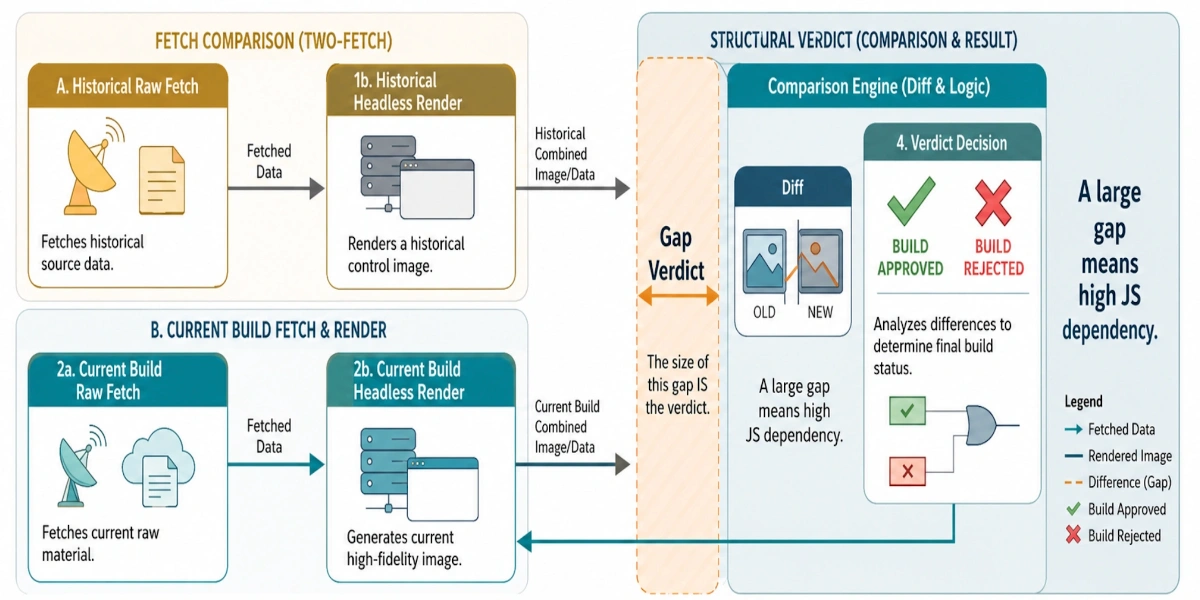
The exact thresholds, published
Most rendering checkers give you a verdict without telling you how they reached it, which makes the result impossible to argue with or verify. These are the actual cut-offs used in the classifier. Content ratio is the visible word count of the raw HTML divided by the visible word count of the rendered DOM.
There is one deliberate exception. If the raw fetch is blocked but the rendered version returns real content, the tool reports that the crawler was blocked rather than calling the page CSR. A site that refuses plain HTTP requests is not the same thing as a site with no server-rendered content, and conflating the two produces a confidently wrong answer.
What this tool cannot tell you
A diagnostic is only useful if you know where it stops. Four things this tool does not do:
How this is paid for
The tool is free to use and the diagnosis costs nothing. It is funded by consulting: some people who run a check discover a real rendering problem, and a few of them hire me to fix it. That is the core of the business model, and you are reading it on the about page rather than finding it out later.
What this means practically: the verdict is never tuned to make your site look worse than it is. A tool that cried wolf to sell audits would stop being cited, and being cited is the only reason anyone finds it. The incentive genuinely points toward accuracy.
Frequently asked
ssrchecker was built and is maintained by Abdul Mannan Soomro, a technical SEO consultant specialising in JavaScript rendering and indexing problems. The tool grew out of client work where sites looked complete in a browser but nearly empty to a crawler.